How to cook brussels sprouts, you roast them

January 20th, 2010
Roasted Brussels Sprouts

I love brussels sprouts, I cook them at least 3 times a week, but it was not always the case.

I grew up thinking brussels sprouts were gross, because they have that reputation, that no one likes them, right? My mom didn’t cook them growing up, and I had never tried them until I was maybe 23. I saw them at the store once in the frozen food section, one of those “veggie and sauce” microwave deals, wanting some variety, I bought them, and tried them, they were alright, nothing to write home about.

A few years later I got more into cooking and roasting vegetables. Roasting, the application of high dry heat, carmelizes the sugars in most vegetables vastly improving them. I decided to try roasting some sprouts, and I made a discovery. Brussel sprouts were actually very very very good.

Nutrition

Not only are sprouts good, they’re very good for you. They’re a cruciferous vegetable along with broccoli, cauliflower, kale, and cabbage. This family of vegetables are all extremely healthy for you. In addition to the normal vitamins, minerals, fiber, and antioxidants, you find in most vegetables, there are two very special things that these do for you.

Apparently, there is a compound within these plants that helps activate the process that flushes toxins from the cells of your body. Cancer is helped by carcinogens that encourage cell mutations, you should avoid such toxins, but in addition to avoiding them you should also ensure that any that make it into your body get expelled as soon as possible. One reason why a high fiber diet helps prevent colon cancer is that, quite frankly, it keeps things moving out quickly. This is the same concept, but on the cellular level. So eating these vegetables help purge your body of toxins. This is real science folks. I know using the phrase “purge your body of toxins” is reminiscent of various snake oil concoctions throughout history, but in this case, it is real hard science, tested and proven in the laboratory. For more on that science see here.

But wait, there’s more. There is a compound in cruciferous vegetables that literally encourages cancer cells to commit suicide (apoptosis), making them invaluable for people suffering from that disease. But additionally there is a theory that we actually have cells in our body forming tumors all the time, many many small tumors, that our body naturally kills off, and we develop malignant cancer when our body fails to do this house cleaning. So if that is true, then cruciferous vegetables also help terminate these micro-tumors, preventing malignancy in the first place.

So why not make broccoli?

Because brussel sprouts taste better? (they do, seriously) However, honestly, I hate cooking broccoli. It is just so fragile. If you undercook it, it is tough, if you overcook it it is bitter, and there is a very short window between the two. Cauliflower is more forgiving, and can be roasted well and used in things like mac ‘n cheese, but it is also the least nutritious of the lot. Both broccoli and cauliflower too I think are best fresh (frozen is not nearly as flavorful in my opinion) which is of course a little more expensive and a little less practical to keep in the house. Then there is cabbage, which I like, and I add it to meatloaf, casseroles, and of course make things like coleslaw a lot in the summer, but it isn’t quite the hot vegetable side you usually want.

Brussel sprouts work great frozen, have a huge time window for cooking, and are very nutritious (possibly the most nutritious of the bunch). I’ve actually tried this recipe with fresh sprouts a number of times, and it is never as good as with frozen (I don’t know why, it just isn’t). And, despite rumors to the contrary, it is very hard to overcook a brussel sprout (in the oven anyways). To top it all off, it is easy, it takes me less than a minute of labor to prepare this dish.

So, without further ado, your directions:

How to Roast Brussel Sprouts

  1. Cut open a bag of frozen sprouts and empty it into a 9×9 glass baking dish so sprouts form a single layer (use a bigger dish if your bag was bigger than from my store).
  2. Sprinkle olive oil over, I use my little oil bottle (you know the kind made for oils that pours it slowly) and make a zig zag from one side to the other and back. Probably 2-3 tablespoons total.
  3. Sprinkle with about a teaspoon of kosher salt, I just grab a fat pinch, I don’t measure.
  4. Grind a few grinds of fresh black pepper over it.
  5. Shake the pan to promote even coverage, then toss it into a cold oven and set the over to 425 and your timer to 30 minutes.
  6. After 30 minutes, remove, and stir it. Put it in for at least another 30 minutes, but as I said it is very forgiving, and can go as long as another hour at the high end.

You can serve it as is, and I love them, but you can also dress them up with some butter or freshly grated parmigiana cheese.

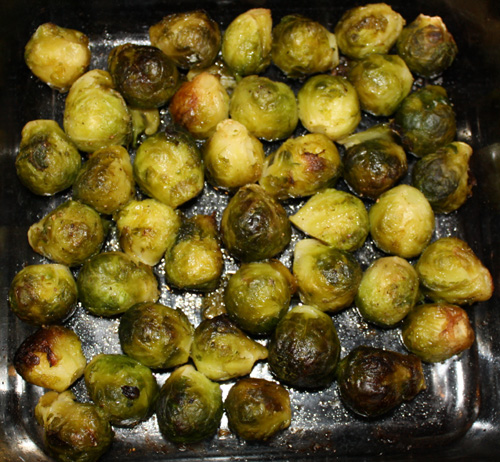
They are sweet, crispy and brown on the outside, soft and savory on the inside, and a little salty.

Now I’ve seen many so called food experts warn against overcooking brussel sprouts (they must be thinking of boiling I’m sure) because they get mushy and whatnot, as if anything mushy is bad. We all like mashed potatoes don’t we? After an hour in the over the sprouts definitely no longer have the crispness of a fresh vegetable, but to those who would turn their nose up at my sprouts, I would ask them to try them first, perhaps they will echo my brother who, upon first trying them said, “The brussel sprouts are amazing.”

So I eat these at least three times a week, and I recommend you do too. They’re easy, they’re cheap, you can buy a lot and store them in your basement freezer, they taste amazing, and they’re incredibly healthy for you. In the future one day should you meet a Vulcan and should they tell you to “Live long and prosper.” You can answer that you will, because you eat brussel sprouts.

Splenda is Safe, Ignore the Fake Doctors

May 25th, 2009

I hate fake doctors, they annoy me so much. You know the people with the Ph.D. from the school of Hard-knocks on alternative healing and natural health?

Here is a general rule for everyone. Only accept scientific information from a scientist. Someone who has actually done research using a rigorous application of the scientific method in their life. Someone who understands what cum hoc is and what it is a fallacy.

Anyways, so these bozos say things like Splenda has chlorine atoms in it, and chlorine is bad, dangerous, a chemical weapon, etc etc.

I’m sorry, but that is just retarded. You know what one of the most toxic and dangerous atoms is? Oxygen. We breathe it in. Do you know how dangerous it is though? Hydrogen too, which we drink. Do you know something you eat every day has chlorine in it? Don’t panic now, but you call it “salt” but technically it is sodium chloride.

The fake doctors like to cite things like a study showing a decrease in the thymus in rats (an organ that usually shrinks by adult hood anyways). The dose required to get this result is 17,000 Splenda packets per day for 30 days.

Did you know you can overdose on water? Did you know you can OD on bananas? Bananas are actually pretty easy to OD on, and you don’t need to eat 17,000 of them.

Practically anything we eat can be dangerous if we overdo it to such a ridiculous degree. Just keep your splenda intake to under 10,000 packets a day and you’ll be safe. Sheesh.

Then they blame it all on corporate marketing and they say “Look at aspartame, people started drinking it and we all got fatter.” A great example of the cum hoc fallacy I mentioned above.

Here is the truth. The fake doctors need to pay their bills. No one goes to an alterative healer, nutritionist, hippy mumbo jumbo person, unless they have been scared away from real solutions. Fear generates business. This happens in many industries, where beliefs trump science, and it is profitable for the practitioners. They like to say the “big bad corporations” are just greed motivated, but all their fear mongering over safe substances is just their own greed trying to drum up business. That is the sorry truth, it is all about money for them, and they want you to be afraid so you’ll come to their seminar or buy their diet or whatever.

They’ll also recommen natural, and imply that natural means safe. This is not the case, cocaine is natural, heroine is natural, nightshade is natural, hemlock is natural. Natural things can kill you.

The truth is, “all natural” means something did not have to undergo rigorous scientific testing or meet FDA approval before making it on to your shelves. A manufacturer may claim their “all natural” product is safe and tested, but there is no law holding them to that claim, no government agency, no regulation. And as such there is no requirement that their testing is done in a scientifically legitimate manner.

I use Splenda in my cooking. I’d rather use pure sucralose, which is concentrated and doesn’t have filler but only commercial producers get that, us regular folks buy Splenda with filler that feeds gut bacteria causing gas, which is really the only side effect from it. I recommend you do like me, and not let the fake doctors scare you.

Redirect

January 21st, 2009

Butternut Squash Soup

October 19th, 2008

My wife says this is the best squash soup she has ever had, and she gets it at lots of restaurants.

Butternut Squash Soup

1 Butternut Squash
1 Large Parsnip (white carrot very very high in potassium)
2 Green Apples
1 Large Sweet Onion
1 Leek (optional… leeks are the giant chive looking things – make it two onions if you leave it out)
2 Quarts Chicken Stock
4 normal, 3 huge, or 5 small yukon gold potatoes
1 large carrot, or however many small ones for the same amount
A couple cloves of garlic, minced
salt
bay leaf
saffron if you have it or want to use
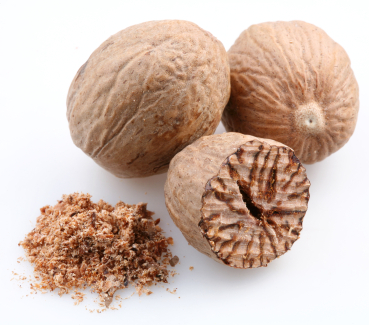
ground nutmeg, freshly shaved is so much better if you find it.
ground cinnamon
chopped chives (optional)

Preheat the over to 425.

Peel the squash, then cut it into chunks, and scrape out the seed cavity (as if you were carving a pumpkin) the chunks should be of moderate size, say, 2 inches.

Clean and chop the potatoes, peeling is optional Medium chunks, 1 inch

Peel and chop the parsnip. medium chunks, 1 inch. Ditto with carrot.

Stick peeled & chopped veggies in a 13×9 baking dish, drisle with olive oil, sprinkle with salt, and toss around for even coating. Stick it in the oven for 30 minutes.

Peel the onion and stick it in a frying pan to carmelize (low-medium heat, salted, a little bit of oil, stirring constantly, until soft). Cut the top and bottom off the leek (you eat the middle part, the white part, with a little green towards the top), cut it in half lengthwise. Rinse it out to remove any dirt, and then chop it up. Stick it in with the onion.

Peel, core, and cut up the apples into 6 slices each. When the oven beeps open it up, toss in the apple, and stir all the veggies. Set the timer for another 30 minutes.

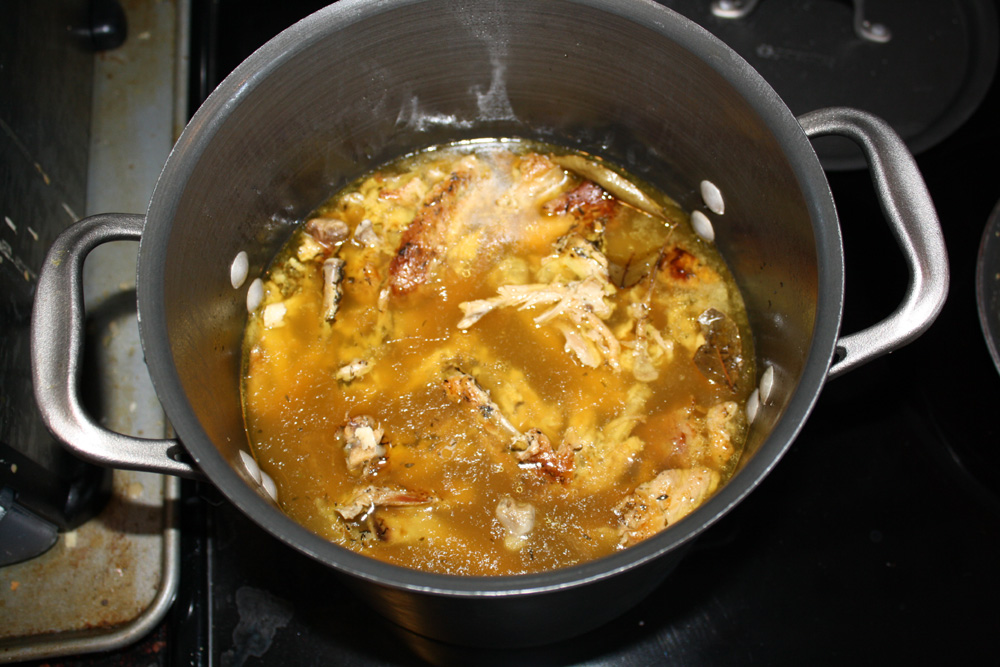
When the oven beeps a second time, put all the veggies into your crockpot (the onion & leek, and everything from the oven) pour over enough chicken stock to cover, add a bay leaf or two, and the saffron if you’re using it, and the garlic. Cook for a few hours, or all day.

30 minutes or so before you want to eat, preheat the oven to 350.

Slice up a nice whole grain baguette, put some cheese (Swiss, gruyere (aged swiss), provolone, parmigiana, mozerella) on top of each slice, stick it in the over until it is toasted.

Meanwhile, get out your immersion stick blender (a must for any serious soup maker), open up the crock pot, remove the bay leaves, and blend it up until smooth. Add a few teaspoons of fresh ground nutmeg (I usually shave off half a nut with my microplane grater), and a tablespoon of cinnamon, blend some more, taste, add more seasoning if desired.

Kill the heat (make sure to check your bread so you don’t burn it), and add 1 cup of milk (you could also use half and half, or cream, but I think milk is just fine). Blend again to mix the milk in well.

Ladle into bowls, garnish with chopped chives and or black pepper if desired, and serve with toasted cheese bread.

Low calories, very very very nutritious, and you get to use two or three veggies you don’t often use (and so may miss the vitamins etc they provide).

Picture coming, next time I make the soup, which should be soon since I just harvested a bunch of squash.

The Best Zucchini Bread I’ve Ever Made

July 21st, 2008

I made this bread recently, it was so good, the best I’ve ever made. Not that unhealthy either.

IngredientsAwesome Zucchini Bread

  • 1/2 cup soy flour
  • 1/2 cup all purpose flour
  • 2 cups whole wheat pastry flour
  • 1 teaspoon salt
  • 2 teaspoon baking soda
  • 1 teaspoon baking powder
  • 1-2 tablespoons cinnamon
  • 2 large eggs
  • 2 cups splenda
  • 2 cups grated zucchini
  • 2/3 cup canola oil
  • 1/2 cup egg substitute
  • 2 teaspoons vanilla extract
  • 2 8oz cans of crushed pineapple

Directions

  1. Preheat oven to 325.
  2. Lightly spoon flour into measuring cups and level, combine flour, salt, baking soda, baking powder, and cinnamon in a large bowl, mix well
  3. Beat eggs with a mixer at medium speed until foamy. Add splenda, zucchini, oil, egg substitute, and vanilla, beating until well blended. Add to flour mixture, stirring just until moist. Fold in pineapple. Spoon batter into 2 loaf pans coated with cooking spray. Bake at 325 for 1 hour or until a toothpick inserted into the center comes out clean. Let cool.

So I got this recipe out of Cooking Light and tinkered with it a little bit, making it actually healthier. Then, because I felt like experimenting, I used 3 different types of flour. Why? Because I have many different types of flour in the house, and I thought, why not? It certainly turned out awesome so I recommend you follow my lead. With the directions as is I thought the batter was a little thick, well, very thick, for me so I added the juice from the pineapple and added some milk and more oil to get it to a nice consistency. If you’ve made quickbreads like this before you’ll know the consistency you want.

One loaf can be frozen for a month and defrosted on the counter if you like, but man, this bread was awesome, truly, the best tasting bread I’ve ever made. And it gives me something to do with all the zucchinis I get from my garden.

Right now in the oven I have a alternative going. I swapped the 16oz of crushed pineapple for 16oz of maraschino cherries and I added half a cup of dark chocolate (hershey’s special dark) cocoa powder. We’ll see how it turns out.

Chocolate Super Healthy Brownies

March 4th, 2008

As I’ve mentioned previously, my wife likes a quick breakfast, and I don’t think shelf bought “protein” “energy” or “power” bars are altogether that healthy with their 20 grams of sugar and whatnot. I know I can do better, and so it was in that spirit that I developed this recipe for super healthy chocolate brownies. These are meal replacement/snack brownies, not dessert brownies.

Before we start, a word on chocolate.

Chocolate is healthy, no seriously, cocoa is very high in antioxidants, protein, and fiber. The fact that it is often mixed with saturated fats and sugar is the problem, but cocoa solids themselves are quite healthy.

To maximize the health of your chocolate snacks always look for the darkest chocolate you can possibly fine, but even though, fats, if not sugars, are necessary, to make chocolate bars or chips of any type.

Ergo, the healthiest way to get chocolate is to find dark chocolate cocoa powder. Cocoa powder is chocolate solids with all the fat removed, but you still get the flavor. Normal cocoa powder isn’t so bad but dark cocoa powder will have 66% less calories, more protein, and more fiber.

Chocolate Super Healthy BrowniesChocolate Super Healthy Brownies

  • 1 can Pumpkin Puree, 15oz
  • 1 cup Whole Wheat Pastry Flour
  • ½ cup Rolled Oats
  • ½ cup Flax Seed Meal
  • 1 cup Soy Protein Powder
  • 1 cup Hersey’s Special Dark Cocoa Powder (or other dark cocoa powder)
  • 1 cup Splenda
  • 4 tbsp Cinnamon
  • 1 cup Egg Beaters or Egg Whites
  • ½ cup Light Sour Cream
  • 1 cup Skim Milk
  • 2 tsp Baking Soda
  • 1 tbsp vanilla extract
  • 1 pkg(16oz-ish) Dark (60% + cocoa) Chocolate Chips (optional)
  1. Preheat Oven to 375
  2. Mix all the dry stuff (oats, flour, flax seed, protein powder, cocoa powder, splenda, cinnamon, and baking soda) together, really well. Sift it if you want.
  3. Put the Egg Beaters in a big bowl, very big, and beat with a hand mixed until nice and foamy and or soft peaks. Normally if making something like an angel food cake we’d be careful now, but we’re not making an angel food cake, so…
  4. Add the pumpkin and sour cream into the bowl and mix well, add the milk and vanilla and start adding the dry mixture a little at a time.
  5. Meanwhile in another part of the kitchen, if you want it extra chocolately you’ll need to melt the optional chocolate chips in a double boiler or a microwave and then drizzle into the mixture, or just drop the chips in if you’d rather have chocolate chunks in the finished product, your choice.
  6. When your mixture has fully come together, stick it into a lubed 13×9 baking dish, it’ll be thick, you should spray the back of a spatula with some non-stick spray to help spread it around. When it is good and even pop it in the oven for 1 hour.

Now, if you cut it into 12 portions, which is typical I think, each one will have:

Without Chocolate Chips: 137 calories, 14g protein, 6g fiber
With Chocolate Chips: 230 calories, 16g protein, 7.5g fiber

Chocolate chips also add sugar and saturated fat. You could also, instead of chips, add chopped nuts, raisins, or something like that. Compare the calorie total of the sans-chip version to any “bar” based food out there. No added sugar, lots of antioxidants and vitamins, lots of protein, and lots of fiber. These brownies are super brownies.

On to the Ingredient Explanation….

I’m not here just to give you recipes, I like to teach why I include certain things in the recipe.

Start with the pumpkin, why do I put pumpkin in this recipe? Well, read the back of your can, see the part that says each serving has 300% of your daily vitamin A needs through beta carotene? That means, that roughly each brownie should end up with 100% of your daily needs, not bad. Vitamin A is a key vitamin but too much of it can cause problems, especially in pregnant women. Beta Carotene though is an entirely safe way to get Vitamin A as your body will manufacture it out of the beta carotene on an as-needed basis, storing any excess still as beta carotene, no chance for overdosing. Beta carotene of course also helps with a myriad of other things.

Whole wheat flour is there for structure, and we’re using whole wheat flour instead of all purpose flour for added protein, fiber, and nutrients.

Rolled oats add more fiber, especially soluble fiber to lower cholesterol, as well as protein. Oats are a super food, eat more of them.

Flax Seed Meal, another super food, is the highest plant source of omega 3 fatty acids (good cholesterol, like from salmon). It also adds fiber and protein.

Soy protein powder of course adds protein. Protein keeps your body healthy and your stomach feeling full.

The cocoa powder adds surprisingly large amounts of protein and fiber, and of course those excellent chocolate antioxidants.

Cinnamon has one of the highest concentrations of antioxidants of any food known to man, seriously. It also adds flavor without any added calories.

Splenda is our key sweetener, and is of course 0 calorie.

Egg Beaters are just egg whites that have been infused with vitamins and colored yellow. They add protein, the vitamins, and it is necessary to have a little egg in almost any baked good. We are using a lot of them though, because we want a lot of protein in these.

The sour cream adds more protein, and contributes moisture (we’re replacing what would otherwise be oil) to the final product. If you had to omit one thing, this would probably be it, I don’t know if it is so necessary.

The milk is our moisture, protein, vitamin D, calcium, etc.

Baking soda is for making it all rise, vanilla is for flavor, and the optional chocolate chips are, of course, for chocolate.

Ridiculously Healthy Chocolate Cake

February 21st, 2008

Whole Grain Cocoa Angel Food Cake

  • 3/4 cup of whole wheat pastry flour
  • 1/4 cup of unsweetened cocoa powder (dark is better if you can find it)
  • 1 1/4 cups of splenda
  • 10 Egg whites (no yoke! get the cartoned egg whites).
  • 1 teaspoon of Cream of tartar
  • 1 teaspoon of vanilla
  • 1/2 teaspoon of lemon or almond extract
  1. Preheat the oven to 350ºF. Sift the flour, cocoa, and 1/4 cup of the sugar 5 times. Set aside. Sift the remaining 1 cup splenda into a separate bowl. Set aside.
  2. Put the egg whites in a superclean bowl and beat them with a hand mixer, you’ll want an actual hand mixer for this, not a stand mixer (they don’t work as well for whipping whites) and not just a mere whisk (your arm will fall off). Add the cream of tarter and beat until the egg whites form stiff peaks, but are not dry. A stiff peak means you can dip something in the eggs and then pull it up and out and turn it upside down and the white will form a peak and stand up straight.
  3. Gently fold in the sifted splenda, 1 tablespoon at a time (you need to be gentle, lest you depress the air bubbles you just made). Add the vanilla and lemon or almond extract. Slowly sift small amounts of the flour mixture over the batter and fold in until all the flour is incorporated. Pour the batter into an ungreased 10 inch straight-sided tube pan (angel food cake pan, 2 part). Bake for 45 minutes. Turn the pan upside down, over the neck of a bottle, and allow to cool. Remove from pan once fully cooled.

In total this cake has around 600 calories, meaning you could eat the whole thing and it’d only be 600 calories. Additionally it has a bunch of fiber and a bunch of protein. To the point where, if you had 1/6th of this cake, you’d have more protein, more fiber, and less calories, than a typical “energy” or “protein” bar.

Serve it plain, with vanilla ice cream, or with a fruit sauce (any type of peeled fruit & berry in a deep skillet on medium heat, add splenda, possibly cinnamon or other sweet seasoning, then a corn starch & water/juice slurry. Simmer until all the fruit falls apart).

Butter Beer Cheesy Pork

January 31st, 2008

Mmm, beer. What real men drink. And yet, how many of you know that beer is an excellent ingredient in the kitchen? In soups, stews, and marinades beer adds dimension like no other liquid. I tell you what, I like cooking with beer more than I like drinking it.

This recipe is a fairly original creation of my own, it is a combination of a few other recipes. I’ve made this numerous times, and every time it has turned out great. I love making it for guests in the summer as well.
Butter Beer Cheesy Pork

  • 4 10oz or so pork chops, cubed cutlets, tenderloin steaks, or any other pork steak cut you fancy.
  • 1 12 oz bottle honey wheat beer, the stronger the flavor the better.
  • 2 cloves garlic, minced
  • 1 tbsp olive oil
  • ¼ tsp salt
  • ½ tsp ground black pepper
  • 1 cup green onions, sliced thin
  • ½ cup chopped roasted pecans (bake in oven at 350 for 10m to roast pecans)
  • 2 tbsp flour
  • 2 tbsp butter
  • Sharp cheddar cheese, shredded, to taste (1-2 cups usually).

Alright, step one, pour the first 5 ingredients (through black pepper) into a zip top plastic bag with the pork. Set it into a bowl in case of leaks, and stick it in the fridge for 4 hours or overnight, longer is better.

Preheat your grill so that it is hot. This dish also tastes well when smoked. So you could use it with plank grilling (cedar). Take the meat out of the marinade, toss it on the grill (or on the wood plank on the grill) and cook to desired doneness, 30-45 minutes usually. But this will vary greatly depending on what cut of meat you are using.

When pork is about half way done put a saucepan on medium heat on your stove. Melt the butter and then when the butter is melted add the flour and whisk rapidly for 3-5 minutes. Then add the reserved marinade from the plastic bag and bring to a boil.

Once you’ve reached a boil let it boil for a few minutes, stirring occasionally, just to make sure it is fully cooked (the marinade was with raw meat after all) then lower the heat to a simmer and start adding the cheese, while whisking constantly.

Here you have decisions to make. How many people are you serving? How much sauce do you need to cover all that pork? I usually end up tossing in another beer into the saucepan, and more cheese, to make more sauce because I like the sauce. Since beer isn’t usually sold in 1 bottle packs, you’re bound to have another bottle in case you need to do the same. If not, water works but isn’t as flavorful. If you need to thicken the sauce more and do not want to add more cheese, make a corn starch slurry (equal parts cold water and corn starch, mixed together in a separate dish, then poured in, it has to be corn starch, flour will not work with cold water like this). Keep tasting the sauce to make sure you like it. The goal here is to make a good, syrup-like thickness, cheese sauce, in enough volume to cover all the meat.

When you’re happy with the sauce and the pork is done, toss in the green onions and chopped pecans, mix, and then pour the sauce over the pork (or, pour it into a bowl and let people serve it themselves).

Is this dish healthy? Sorta, many pork cuts can be very lean, and you’re having relatively small servings of 8-10oz per person. The cheese sauce isn’t as healthy as it could be, but cheese is a very worthy guilty pleasure. The trick though is in the side dishes. Serve this meal with healthy sides like grilled or baked veggies, fresh fruit, and things like that. Don’t serve any bread, pasta, rice, or other starches with it. The pork itself might not be as healthy as it could be, but with good sides the overall meal can be.

Chemistry of Cooking: The Maillard Reaction

January 23rd, 2008

Cooking is very much a study in chemistry, you have to deal with acids, bases, heat, air pressure. Knowing the science behind the food will help to make you a better cook and further your understanding of why recipes go a certain way.

Today, I wish to talk about cooking methods and why they can affect your food.

Stews and boils are cooking food submerged in water, steaming is of course cooking food surrounded by water vapor, and braising is cooking food sitting in water (not fully submerged). All of those cooking methods have one drastic limitation, namely that water cannot exceed 212 degrees. Boiling water is going to be 212 degrees no matter how hard it is boiling. This means, anything cooked in water or water vapor will not be able to exceed ~212 degrees.

This is good in many ways. You can cook something for a long time and if there is adequate moisture you know it will not overcook or burn. It is really hard to burn things that are in boiling water, and that water helps moderate the temperature of your food, preventing drastic swings.

However, there is a major downside to cooking in water, and that is that it inhibits the Maillard Reaction.

For instance, any dish that requires a browned topping will always tell you to either cook uncovered, or uncovered for a period of time to brown the top. This is because covering a cover traps steam, which then keeps the temperature moderated at around 212, way too low for the Maillard Reaction.

So what is the Maillard Reaction? It is the reaction which caramelizes sugars in food to turn it brown. The most straightforward example is the creation of actual caramel from sugar. The sugar is denatured into over a hundred different compounds, creating a very sweet and complex taste.

But nearly everything has sugars (starches) in it, and so the Maillard Reaction is also responsible for making toast taste so much better than bread, for making skin crispy on turkey, for making grill marks on meat, and for making pretty much every golden brown and delicious food, golden brown and delicious. This all doesn’t really start to happen until around 230 degrees and continues on up past 300.

So, you can’t get browning, in any food, in the presence of water. So, if you want crisp, you need dry heat. This is also why you can’t really brown things in the microwave (microwaves just heat water, water can’t go higher than 212) and why non-stick pans can’t really brown food either (They also just don’t get hot enough… nor are they supposed to, high heat ruins their nonstick surface).

But in addition to browning the outside of food, the Maillard Reaction will work on the interior as well. This is why roasted vegetables taste so much better than boiled vegetables.

So, now you know. This is why certain foods taste better when cooked with dry heat, and this is why you are sometimes asked to brown and or roast something before introducing it to liquid.

Whole Grain Healthy Banana Bread

December 18th, 2007

This bread is packed with nutrition and makes a great heart healthy snack. It tastes great, you’ll never guess it has no oil, no butter, and no added sugar.
Banana Bread

Ingredients

  • 3/4 Cup Splenda
  • 3/4 Cup Flaxseed Meal
  • 5 very ripe bananas, peeled and mashed
  • 1/4 cup skim milk
  • 1/4 cup Egg Beaters or egg whites
  • 1/4 cup low fat sour cream
  • 2 cups stone ground whole wheat flour
  • 2 tsp baking soda
  • 1/2 tsp salt
  • 2 tsp cinnamon
  • 1 tsp ginger
  • 1 tsp nutmeg
  • 1/2 cup raisins or other dried fruit (optional)
  • 1/2 cup chopped pecans or other nut (optional)

Directions

  1. Preheat oven to 350 degrees.
  2. Spray a 9′ x 5′ loaf pan with cooking spray.
  3. Mix together Splenda, flaxseed meal, bananas, milk, sour cream, egg whites, raisin, and nuts until well blended.
  4. In a different bowl mix together flour, salt, baking soda, and spices.
  5. Mix the two bowls together until the mixture is evenly moist, do not overmix.
  6. Spoon into your pan and place in oven for 45-75 minutes, cooking times will vary, use a toothpick to test for doneness.

Top of page...